
Understand what makes a candid photo compelling
A candid photograph feels observed rather than arranged. It does not need to be perfectly sharp, perfectly lit or perfectly timed to hold attention. What matters is the sense that the viewer has arrived inside a real moment. This candid photography guide starts with that feeling, because technique works best when it serves the scene.
Authenticity versus staged spontaneity
A truly candid image grows from what people are already doing, while staged spontaneity asks them to perform being relaxed. You can still make a situation easier by choosing a comfortable setting or offering a simple prompt, but avoid directing every hand, smile and glance. Let the moment breathe and give people room to forget the camera.
If you need to recreate a moment for practical reasons, be honest about what happened. A photograph can be thoughtfully arranged and still be appealing, but it should not be presented as an unplanned instant.
Emotion, movement, and meaningful details
Emotion is not limited to broad laughter or visible excitement. A pause before someone speaks, a hand reaching across a table, or a child concentrating on a small task can carry just as much feeling. Look for movement and detail that reveal a relationship or a mood without requiring explanation.
Your timing should include what happens just before and after the obvious expression. The quiet preparation, the release of tension and the shared glance may be stronger than the central action.
The role of context and storytelling
A face alone can be expressive, but surroundings tell you where the person is and what they are experiencing. Include a doorway, tram stop, kitchen bench or patch of afternoon light when it adds useful information. Context turns an isolated expression into part of a story.
Try to leave enough visual information for the viewer to ask a question. The best frame may not explain everything; it gives the moment somewhere to live.
When imperfect moments create stronger images
A tilted frame, slight blur or half-hidden face can make an image feel immediate. These imperfections are only a problem when they remove the subject’s meaning or distract from the story. Before deleting a photograph, ask whether its roughness carries energy.
A technically clean image is not automatically the most truthful one. Sometimes the photograph that feels a little unfinished is the one you remember.
Prepare for candid photography before you shoot
Preparation makes you less intrusive and more responsive. You do not need a large kit or a complicated plan; you need a phone or camera that is ready, a place where activity is likely, and a clear idea of how you will behave around people. A quiet approach often gives you more opportunities than conspicuous equipment.
Choosing the right camera and lens
A phone is often an excellent starting point because it is familiar, light and easy to keep at hand. Use the focal length that lets you stay at a respectful distance, and avoid changing lenses or apps while the moment is unfolding. The best equipment is usually the equipment you can operate without looking down.
If you use a dedicated camera, a small body and modest lens can help you move naturally through a crowded street or family gathering. Prioritise comfort, quick access and reliable focus over impressive specifications.
Setting up discreetly and staying ready
Before you begin, check your battery, storage and exposure settings. Keep the camera or phone in a position you can raise smoothly, rather than buried in a bag. You should be ready to respond without making every moment feel like a production.
Mute unnecessary sounds where appropriate, but remain aware of your surroundings. Staying ready also means putting the device away when the situation calls for your full attention.
Scouting locations and anticipating activity
Spend a few minutes watching before taking photographs. Notice where people pause, where light falls, how groups move and which backgrounds are less distracting. In Australian cities, a tram platform, market lane or shaded arcade can offer repeating patterns of movement without requiring you to chase every subject.
Anticipation improves your timing. If you see someone approaching a bright patch of light or a group beginning a conversation, choose your position first and wait for the moment to arrive.
Building trust with the people around you
Respect is part of preparation, not an afterthought. If someone notices you and seems uncomfortable, lower the camera and acknowledge them. You can explain what you are doing, offer to delete a frame where appropriate, or ask before making another photograph.
A friendly manner does not guarantee permission, and public visibility does not remove every ethical consideration. Treat people as participants in a shared place, not as scenery.
Choose camera settings for fast-moving moments
Settings should reduce decisions, not become a second subject. Start with the light you have, the speed of the scene and the amount of background separation you want. On a phone, this may mean using its standard camera and exposure control; on a camera, it may mean choosing a dependable priority mode.
Selecting shutter speed for sharp images
Movement usually needs a faster shutter speed, particularly when hands, feet or faces are changing position. Begin with a speed that freezes the action and adjust when the light changes. If the scene is calm, a slower speed may preserve more light, but check for blur before committing to a sequence.
Do not treat blur as an automatic failure. A small amount can suggest movement, provided the important part of the image remains readable.
Balancing aperture, ISO, and available light
A wider aperture can separate a person from a busy background, while a higher ISO can help you maintain a useful shutter speed in dim conditions. These choices involve trade-offs: a shallow depth of field can miss focus, and higher sensitivity can make shadows look rougher.
In changing street light, a slightly brighter, noisier photograph may be preferable to a clean frame that is blurred. Watch the whole scene rather than protecting one setting at the expense of timing.
Using autofocus and burst mode effectively
Use a focus area that suits the subject’s movement and keep your tracking modest when the background is confusing. Burst mode can help with a gesture or passing interaction, but it is not a substitute for anticipation. Hold it briefly, then review the sequence with care.
A useful sequence might contain only one frame where the expression, gesture and background align. Select that frame later rather than judging the scene while it is still unfolding.
When manual, aperture priority, or shutter priority works best
Manual exposure can be useful when the light is stable and you want consistent frames. Aperture priority suits situations where background separation matters, while shutter priority gives you more control over movement. Phone users can often achieve a similar result by locking exposure and focus for a short period.
Choose the simplest option that keeps you present. If the light changes quickly, a flexible automatic mode may produce more keepers than a carefully controlled setting that takes too long to adjust.
Learn how to photograph people naturally
People relax when they are not being managed. Your role is to notice the rhythm of a place, make small adjustments and avoid turning every person into a subject who must perform. Natural photographs are usually built from patience and clear boundaries.
Observing before raising the camera
Watch how people occupy space before you photograph them. Notice repeated gestures, relationships and moments when attention moves away from the camera. This short pause helps you decide whether a photograph has meaning or whether you are simply reacting to movement.
Observation also reveals when not to take the picture. A private conversation, visible distress or vulnerable situation may deserve distance rather than documentation.
Using simple prompts instead of rigid poses
If you are photographing people who know you, offer an activity rather than a pose. Ask them to walk together, make a drink, look through an album or continue a conversation. The prompt gives their hands and attention somewhere to go without dictating a facial expression.
Keep the instruction brief, then step back. The less you correct, the more likely the interaction will develop its own rhythm.
Blending into the environment
Move slowly, dress suitably for the setting and avoid repeatedly circling the same person. In a city, standing near an existing flow of pedestrians can make your presence less disruptive than approaching from odd angles. A phone held naturally can also reduce the sense of a formal shoot.
Blending in does not mean hiding or misleading people. It means behaving like a considerate person who belongs in the shared space.
Capturing interactions without interrupting them
Look for the space between people: a shared glance, an overlapping gesture or one person listening while another speaks. Frame the interaction rather than demanding that either person look at you. This preserves the relationship that gives the photograph its meaning.
If the group notices you, let the moment change naturally. You may get a wave, a laugh or a conversation, and that new response can become part of the story if everyone is comfortable.
Improve composition and timing
Composition gives a candid moment structure. You are not simply waiting for something interesting; you are deciding what belongs in the frame and what can be left out. Small shifts in your position often matter more than elaborate camera settings.
Framing subjects with backgrounds and foregrounds
Use doorways, railings, foliage and passing shapes to create layers, but make sure they do not compete with the subject. A foreground edge can make the viewer feel close to the action, while a clean background can give a quiet gesture room to register.
Check the edges before pressing the shutter. Distracting poles, bright patches and accidental objects often weaken an otherwise genuine moment.
Using light, shadows, and reflections
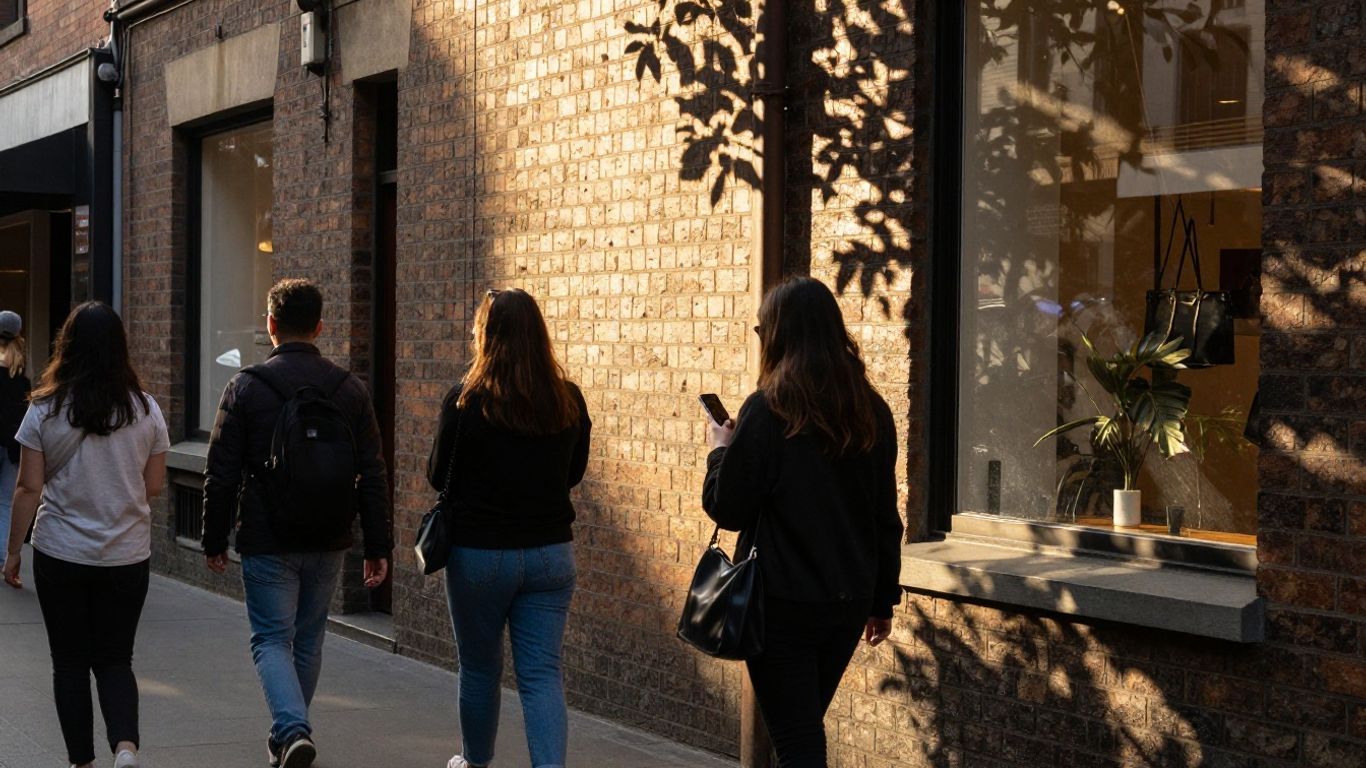
Side light can reveal expression and texture, while backlight can reduce detail and create a graphic outline. Reflections in shop windows, puddles or polished surfaces can add a second viewpoint, especially when the street is busy.
Watch how light changes as people move. A subject may step from shade into a narrow bright area for only a second, so decide your position before that transition arrives.
Applying the rule of thirds and visual balance
The rule of thirds is a useful starting point, not a requirement. Place a subject away from the centre when the surrounding space shows where they are looking or moving. At other times, a centred frame may suit a direct gaze or a strong architectural setting.
Balance can come from colour, shape, light or empty space. Review the entire frame rather than placing all your attention on the face.
Anticipating gestures, expressions, and decisive moments
A decisive moment often follows a small clue: someone turns their head, lifts a cup, reaches for a handrail or leans towards a companion. Once you recognise the clue, pre-frame the area and wait rather than following the action late.
Use short bursts only when they help. The aim is to recognise the moment early enough that you can make one deliberate photograph.
Knowing when to move closer or wait
Move closer when the subject’s expression or gesture is too small to carry the frame, but do it gradually and with awareness. Waiting is better when the light, background or interaction is about to improve. Your position should support the scene, not pressure the people in it.
A few quiet seconds can change everything. If the moment is already complete, accept that and look for the next one instead of forcing a picture.
Adapt your approach to different situations
Candid work changes with the setting. A family gathering gives you familiarity, a wedding demands restraint, and street photography asks you to read public space quickly. The principles remain steady: observe, stay ready, and respect the people whose lives enter your frame.
Candid photography at family gatherings
Family events offer history and access, but familiarity can make people feel watched. Photograph the small rituals around the main occasion: someone preparing food, an older relative listening, or children absorbed in a game. Step away from constant directing so the gathering can retain its own pace.
Tell relatives how you intend to use the photographs, especially before sharing them publicly. Being related to someone does not mean every image is suitable for publication.
Capturing genuine moments at weddings and events
At a wedding or formal event, stay alert to transitions rather than photographing every stage from the same position. Guests arriving, hands adjusting clothing, quiet conversations and the release after a formal part can provide more intimate frames.
Respect the official photographer, staff and guests. Avoid blocking important views, and do not interrupt a private exchange for the sake of a photograph.
Photographing everyday life at home
Home offers familiar light, repeated routines and details that would be invisible to an outsider. Photograph a person making breakfast, repairing something or resting near a window, and include enough of the room to show why the moment belongs there.
Keep the camera nearby but do not make it a constant presence. Put it down when people need privacy or when participation matters more than documentation.
Finding authentic scenes in street photography
Street photography rewards patience in ordinary places. Watch crossings, shopfronts, bus shelters, laneways and public seating for moments where light, movement and human behaviour briefly align. A strong street image can be quiet; it does not need spectacle.
In Australian cities, weather and changing light can reshape a familiar route. Return to the same location at different times and learn its patterns instead of always searching for somewhere new.
Working in low-light and crowded environments
In low light, look for stable surfaces, pools of illumination and subjects who pause. Keep your movements controlled and accept a little grain if it preserves the mood. In crowds, simplify your composition and watch for separation between overlapping faces and limbs.
Crowding is not permission to ignore boundaries. Leave room for people to move, avoid photographing vulnerable situations, and be prepared to explain yourself calmly if someone asks.
Edit and share candid photos responsibly
Editing should clarify what you noticed, not rewrite what happened. Start by selecting photographs with a clear emotional or visual reason to exist. Then make restrained adjustments that help the viewer see the scene as you experienced it.
Selecting images that tell a clear story
Begin with a broad review, then remove duplicates and frames that repeat the same idea. Look for variety in distance, gesture, setting and pace. A strong collection may include a quiet detail beside a wider scene, allowing the viewer to understand both the place and its people.
Do not keep a photograph solely because it was difficult to make. The final image should communicate something beyond the effort behind it.
Making natural adjustments to color and exposure
Correct exposure gently, recover distracting highlights where possible and adjust colour so it resembles the scene’s atmosphere. Cropping can strengthen attention, but leave enough context when the surroundings matter. Make changes while checking skin tones, shadows and the edges of the frame.
If you are editing on a phone, small adjustments are usually enough. A consistent treatment across several photographs will feel calmer than dramatic changes from frame to frame.
Avoiding edits that remove authentic character
Be cautious with heavy skin smoothing, artificial blur and content removal. These changes can make a candid photograph look staged or erase details that carry its history. Dust and small distractions may be worth correcting, but ask whether the imperfection is part of the moment.
Keep an original copy before making significant changes. That simple habit lets you revisit a decision without losing the photograph as it was made.
Respecting privacy, consent, and local laws
Think carefully before posting identifiable people, children or sensitive situations. Privacy expectations vary by place and circumstance, and rules can differ between public and private settings. When uncertain, ask permission, avoid publishing the image, or crop it so the person cannot reasonably be identified.
Consent is more than a quick nod at the camera. Explain where the photograph may appear and respect a refusal without argument. Good practice protects both the subject and the trust that makes candid work possible.
Creating a cohesive gallery or photo series
A series works when its photographs share a question, place, mood or period of time. Arrange images so the pace changes naturally: a wide scene can give the eye room before a close detail, while a quiet frame can soften a run of action.
Before sharing, view the collection as a stranger would. Remove anything that feels repetitive, intrusive or unclear, then write a short caption that provides context without explaining every emotion.
Conclusion
Candid photography becomes more rewarding when you stop chasing perfect reactions and start paying attention to real behaviour, light and place. Keep your phone or camera ready, work quietly, compose with intention and treat people with respect. With practice, ordinary Australian streets, homes and gatherings can offer photographs that feel honest because they were allowed to unfold.